PHALAENOPSIS
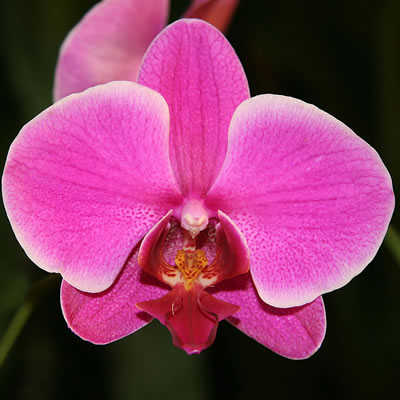
OK so you have bought your first orchid, it’s probably a Phalaenopsis, and you got it at a garden centre or the supermarket.
The Phalaenopsis orchid is often referred to as the moth orchid, and comes in a variety of shapes sizes and colours.
All have the same growth habit, which is three to five or more flat fleshy leaves, with one or two flowering stems growing from between them, and each stem can hold from 6 to over a dozen beautiful blooms.
They make excellent house plants, but don't forget to make certain that the temperature at night stays above 58deg. f or the plant will suffer.
The leaves as fleshy and rounded, sometimes attractively mottled.
phalaenopsis Cultural Information...
HOW TO GROW ORCHIDS
Orchids for beginners - help and advice on orchids as houseplants...
CYMBIDIUM
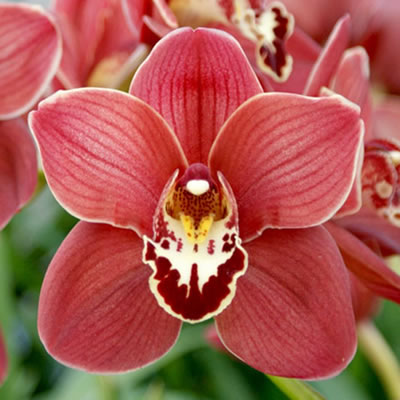
Cymbidium (pronounced sim-bid-ee-urn) must rank as one of the best known and widely popular of all orchids.
The genus consists of about 50 species and, from these, thousands of hybrids have been bred.
The wild types are found growing naturally in China, and Japan through the Himalayas, South East Asia to Australia.
They may be terrestrial in habit or epiphytic or even lithophytic (growing on rocks).
Cool growing orchids will burn easily in full sun, and do best in a temperature range of 50 to 65 deg. The cymbidium actually enjoys being outside for the summer, but make sure it cannot be eaten by pests, or absolutely soaked in wet weather.
cymbidium Cultural Information...
CATTLEYAS and LAELIAS
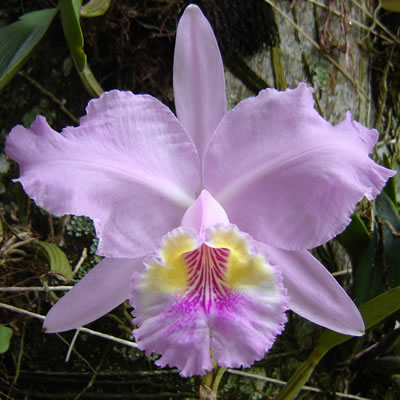
These orchids are the most sumptuous and exotic of all and are chosen for corsages.
In nature there are about 50 species each of Cattleya and of Laelia from Central America, growing through the Amazon region to the south of Brazil.
Each year a dormant bud at the base grows into a new shoot. This thickens to produce the current year's pseudobulb. The flowers arise from the axil of the current year's leaf where a protective sheath usually develops, and come in a range of colours from white and pink to green and purple, depending on the parentage and genera. Some flower twice yearly.
cATTLEYA Cultural Information...
These orchids are the most sumptuous and exotic of all and are chosen for corsages.
In nature there are about 50 species each of Cattleya and of Laelia from Central America, growing through the Amazon region to the south of Brazil.
Each year a dormant bud at the base grows into a new shoot. This thickens to produce the current year's pseudobulb. The flowers arise from the axil of the current year's leaf where a protective sheath usually develops, and come in a range of colours from white and pink to green and purple, depending on the parentage and genera. Some flower twice yearly.
cATTLEYA Cultural Information...
Popular orchids for the home, conservatory or greenhouse
some of our favourite orchids
Popular orchids....
Therr are many thousands of orchids in the world, the images of the easiest of the popular orchids are above this paragraph, but most orchid collections will have some if not all of the ones whose images are shown below.
Orchids such as Disa and Vanda are perhaps not as easy as some, but very beautiful, the Disa orchid is essentailly a plant of stream margins in cooler climbs suchs table mountain in South Africa, they require to be constantly wet, and perhaps need specialist attention.
The vanda orchids seem to do reasonably well if placed into a container with just pieces of lumps of bark holding them in postion, and watered copiously this well drained situation must not be too unlike their natural habitat when theu receive thorough drenchings but dry our quickly afterwards.
Dendrobiums require a winter rest period when watering should be reduced to a minimum and they are placed in a position where the temperature drops below 55deg. but no freezing.
Zygopetalums and Miltonias can be heavily perfumed and do make good houseplants.
Of course you may have only bought the one orchid, perhaps two, but the world of orchids is populated with many varieties, most of which you will not see in a supermarket or garden centre, but you will fall in love with; like the ones below
-
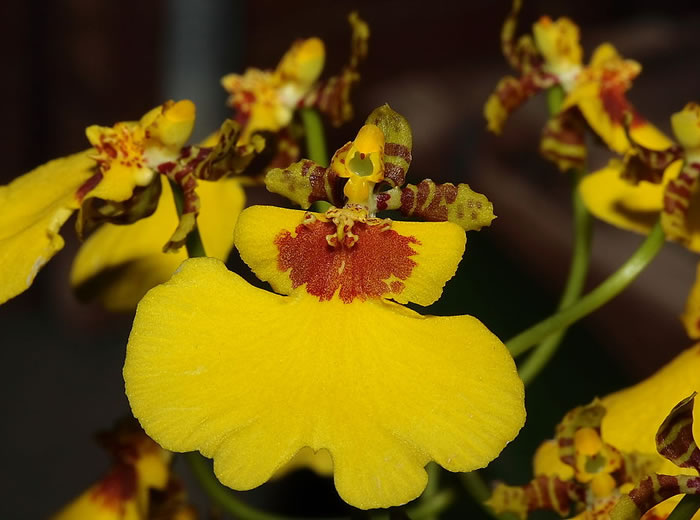
Oncidium Orchids
often called
"dancing ladies" -
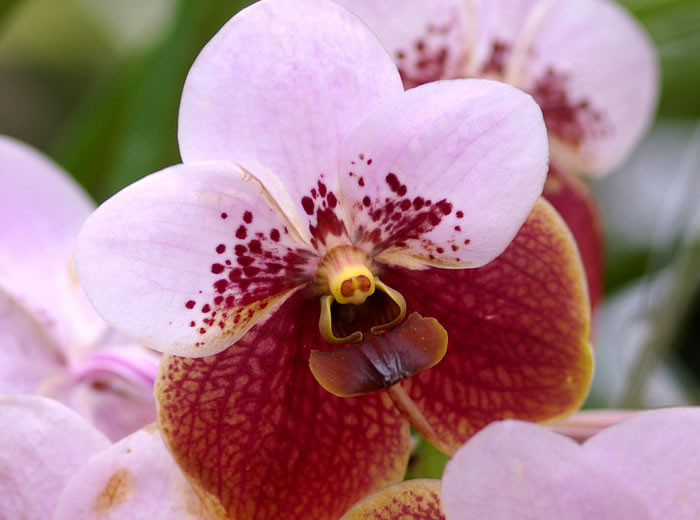
Vanda
sanderiana
"Euanthe"
-
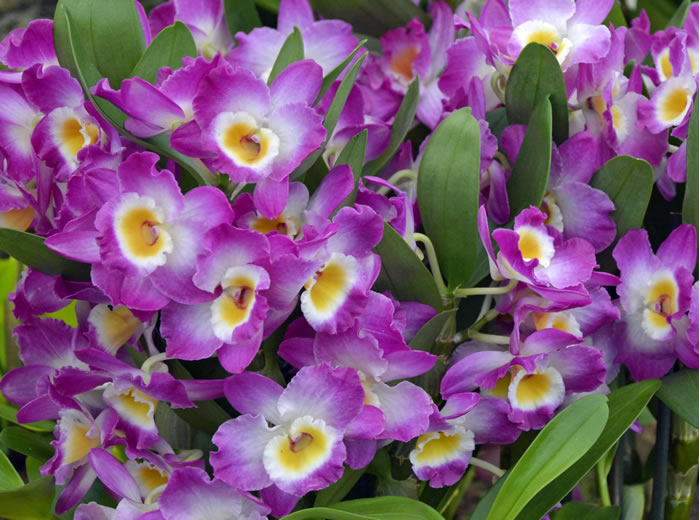
Dendrobiam
Comet King
-
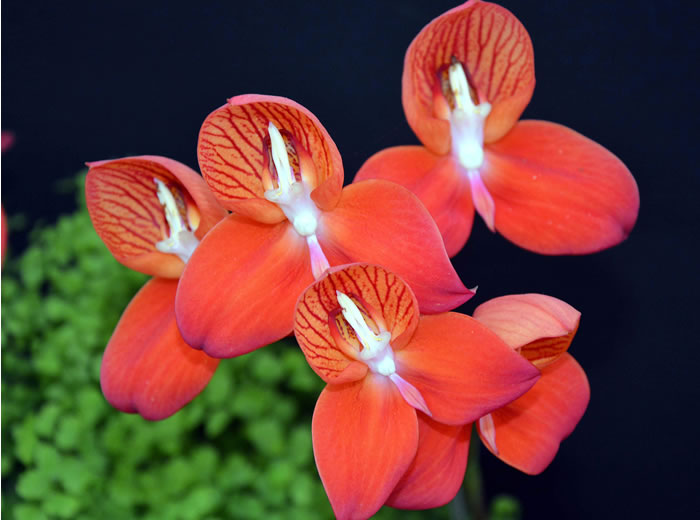
Disa Uniflora
more difficult
than some -
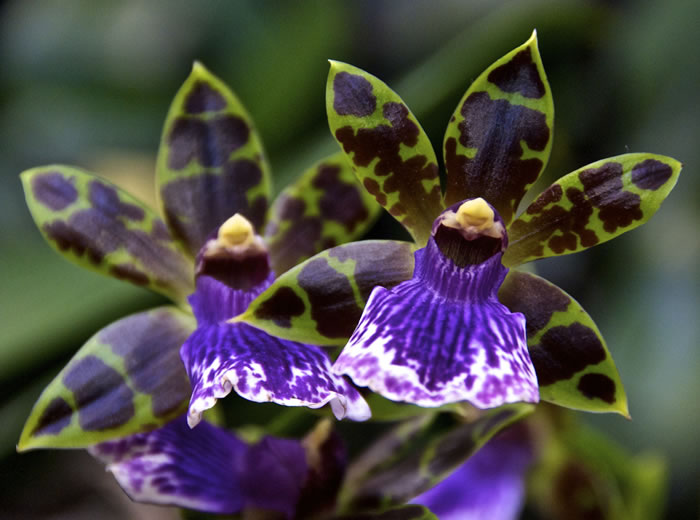
Zygopetalum
usually
perfumed -
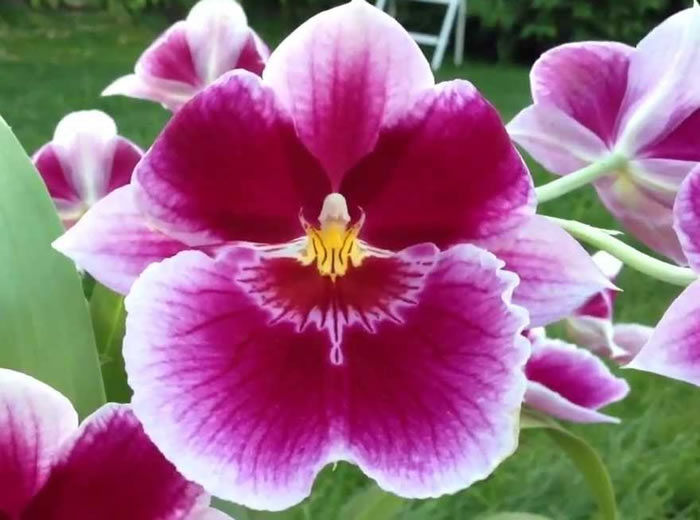
Miltonia
often called
pansy orchid -
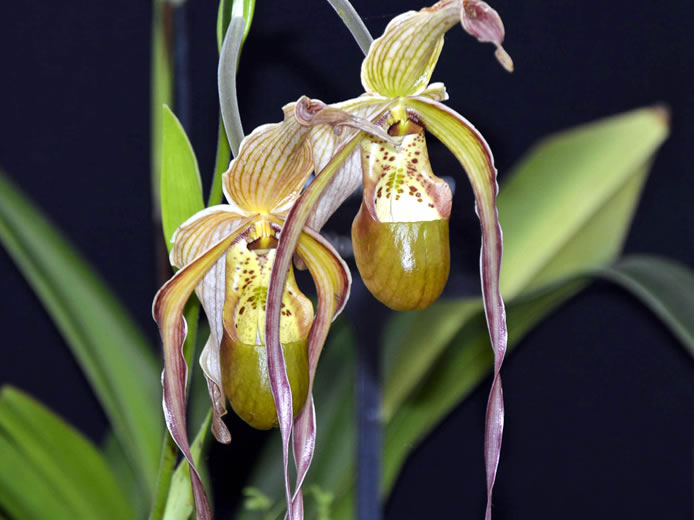
phragmipedium
nitidissimum
-
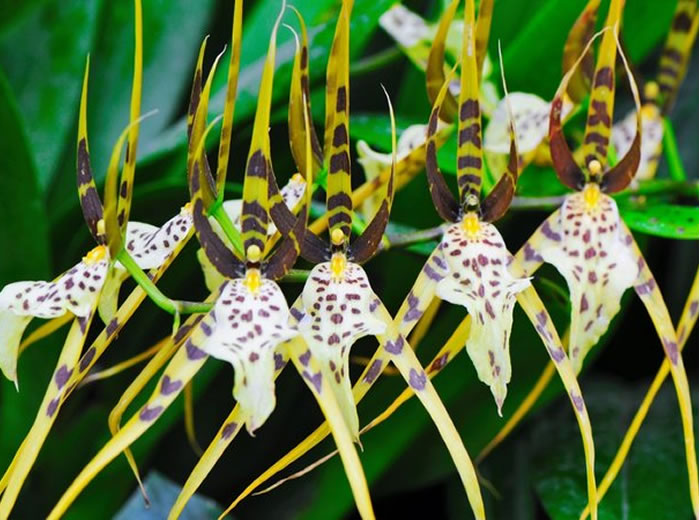
Brassia Rex
The
Spider Orchid

Categories orchids, popular orchids, beginners orchids, North of England Orchid Society
